

NSW pink slip checklist: what’s inspected and how to pass first time
A pink slip checklist covers the key safety items an authorised examiner checks before your vehicle can pass its NSW eSafety inspection. For most light vehicles more than five years old, a current safety inspection report is required before registration can be renewed. Understanding the pink slip requirements NSW drivers need to meet will give you a chance to spot simple problems before inspection day, from a blown brake light to worn tyres or damaged windscreen glass.
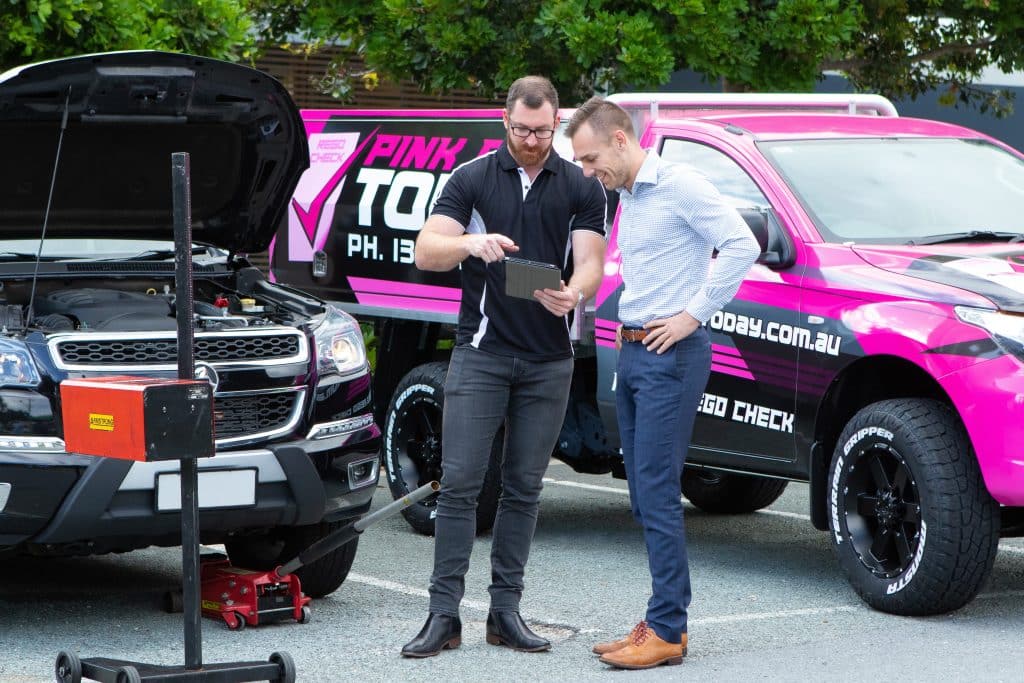
Pink Slip Today can also carry out the required check at a suitable home or workplace location. If you’re ready to organise yours, see our pink slip inspection service.
The 12-point pink slip inspection checklist
So, what actually gets checked? The inspection is designed to confirm that your vehicle meets the minimum safety standards required for NSW roads. While the inspection covers the vehicle as a whole, these are 12 of the key areas to check before your appointment.
- Brakes – The braking system is checked for safe operation, including braking performance and components such as pads, discs and brake lines. Worn components, poor braking performance or fluid leaks can result in a fail.
- Tyres – Tyres need sufficient tread and must be free from serious damage, cracking or other defects. Check for uneven wear and make sure the tread is at least 1.5mm deep across the required section of the tyre.
- Suspension – The examiner checks suspension components for excessive wear, damage or looseness. Worn shock absorbers, damaged bushes and other faulty components can affect stability and road handling.
- Steering – Your steering needs to operate safely and without excessive free play. Loose, damaged or badly worn steering components may prevent the vehicle from passing.
- Battery – The battery should be properly secured and its terminals and connections in safe condition. A loose battery, leaking battery or insecure electrical connections can cause problems.
- Engine – The engine bay is inspected for issues that could make the vehicle unsafe or unroadworthy. This can include insecure components, damaged mounts and other obvious mechanical defects.
- Lights – Headlights, tail lights, brake lights and other required lights must work correctly and be securely fitted. A simple blown globe is one of the easiest problems to find before your inspection.
- Indicators – Front, rear and side indicators, where fitted, need to operate correctly and be clearly visible. Check every indicator as well as your hazard lights before the inspection.
- Windscreen – The windscreen must provide the driver with adequate visibility. Significant cracks, chips or damage within critical areas of the driver’s view can cause a vehicle to fail, as can faulty washers or wipers.
- Seatbelts – Seatbelts must be securely mounted, lock and retract correctly, and be free from serious cuts or deterioration. Check each belt and buckle, including those in seats you rarely use.
- Oil and fluid leaks – Engine, transmission and other fluid leaks are checked, particularly where they can drip onto the road, exhaust or braking components. An active or significant leak should be investigated before inspection.
- Number plates – Your number plates need to be properly fitted, legible and clearly visible. Damaged, obscured or insecure plates may need attention before the vehicle can pass.
Common reasons pink slips fail (and how to avoid them)
Some problems are difficult to spot without a mechanic, but others can be found with a quick check at home:
- Tyres: Look for worn or uneven tread, cuts and visible damage. If the tread is approaching the legal 1.5mm minimum, replace the tyre rather than hoping it will pass.
- Oil leaks: Check the ground where you normally park. Fresh oil or fluid spots can be an early warning that a leak needs attention.
- Lights: Turn on every light and ask someone to check your brake lights while you press the pedal. Replacing a blown globe beforehand can save a failed inspection.
- Windscreen: Look closely for chips and cracks, particularly in the driver’s field of view. Repairing a small chip early may also prevent it from spreading.
What happens if your car fails the inspection?
If your vehicle doesn’t meet the pink slip requirements, the examiner will identify the defects that need to be repaired. You’ll need to have the necessary work completed before the vehicle can pass.
Under current NSW rules, repairs must be carried out within 14 days of the first inspection, followed by a second inspection. You can have the repairs completed by a suitably qualified mechanic of your choice. If it’s left longer than 14 days and the original inspection is cancelled, another full safety inspection will be required.
Frequently asked questions
How much does a pink slip cost in NSW?
The NSW Government sets maximum safety-check fees. From 1 July 2026, the maximum fee for a standard light-vehicle safety check is $52 including GST. Mobile providers may charge an additional, separately disclosed travel or call-out fee. Pink Slip Today’s mobile inspection services currently start from $99.
How long does a mobile pink slip inspection take?
The time required depends on the vehicle and whether the examiner identifies anything needing closer attention. Allow enough time for the authorised examiner to complete all required safety checks properly rather than treating it as a quick visual once-over.
Do I need a pink slip check or a rego inspection?
In NSW, people commonly use ‘pink slip’, ‘eSafety check’, ‘safety check’ and ‘rego inspection’ to describe the same inspection required for registration renewal. Most light vehicles more than five years old require one, but your registration renewal notice will tell you if your vehicle needs a safety inspection.
Once your vehicle passes, the result is submitted electronically to Transport for NSW. A safety inspection report for a light vehicle is generally valid for six months.
Can I get a pink slip check done at home or at work?
Yes. NSW allows authorised mobile examiners to complete safety checks at a home, workplace or another suitable location, provided the inspection site meets the required conditions.
Pink Slip Today provides this service across Sydney as well as the Central Coast and Newcastle. See our pink slip inspections page for booking information.
Ready to book your inspection?
Pink Slip Today provides authorised vehicle safety checks across Sydney, the Central Coast and Newcastle, with mobile services currently starting from $99.
Book your pink slip inspection and arrange a time and location that suits you.